Islamabad
Islamabad is the capital of Pakistan and the city where Amir's quest to rescue Sohrab reaches its most harrowing and transformative phase. After fleeing Kabul with the boy, Amir brings him to this clean, modern city, which stands in stark contrast to the rubble and chaos of Afghanistan. Yet Islamabad is not a place of simple refuge; it becomes the setting for Sohrab's suicide attempt, the collapse of Amir's promises, and the slow, uncertain beginning of healing. The city functions as a liminal space between the war-torn past and an unknown American future, a place where the consequences of past betrayals must be confronted without the possibility of escape.
A City of Contrasts and False Hope
Amir first sees Islamabad as a vision of what Kabul might have become. The streets are wider and cleaner than Peshawar's, lined with hibiscus and flame trees, and the bazaars are organized rather than clogged with rickshaws and pedestrians. The architecture is elegant and modern, and parks bloom with roses and jasmine in the shadows of trees. The famous Shah Faisal Mosque, with its giant concrete girders and soaring minarets, impresses Sohrab when they drive past it. The hotel room Amir secures is a vast improvement over the one in Kabul: clean sheets, a vacuumed carpet, a spotless bathroom with shampoo, soap, and towels that smell like lemon, and no bloodstains on the walls. A television set sits on the dresser. For a brief moment, the city seems to offer the possibility of a new beginning. Amir tells Sohrab about San Francisco's steep streets and fog-shrouded bridges, and the boy's face shows wonder. Sohrab even shares the story of the sour apples his mother told him about, saying he can wait for America just as he learned to wait for fruit to ripen. But this fragile hope is built on a promise Amir cannot keep.
The Collapse of Trust and the Bathroom
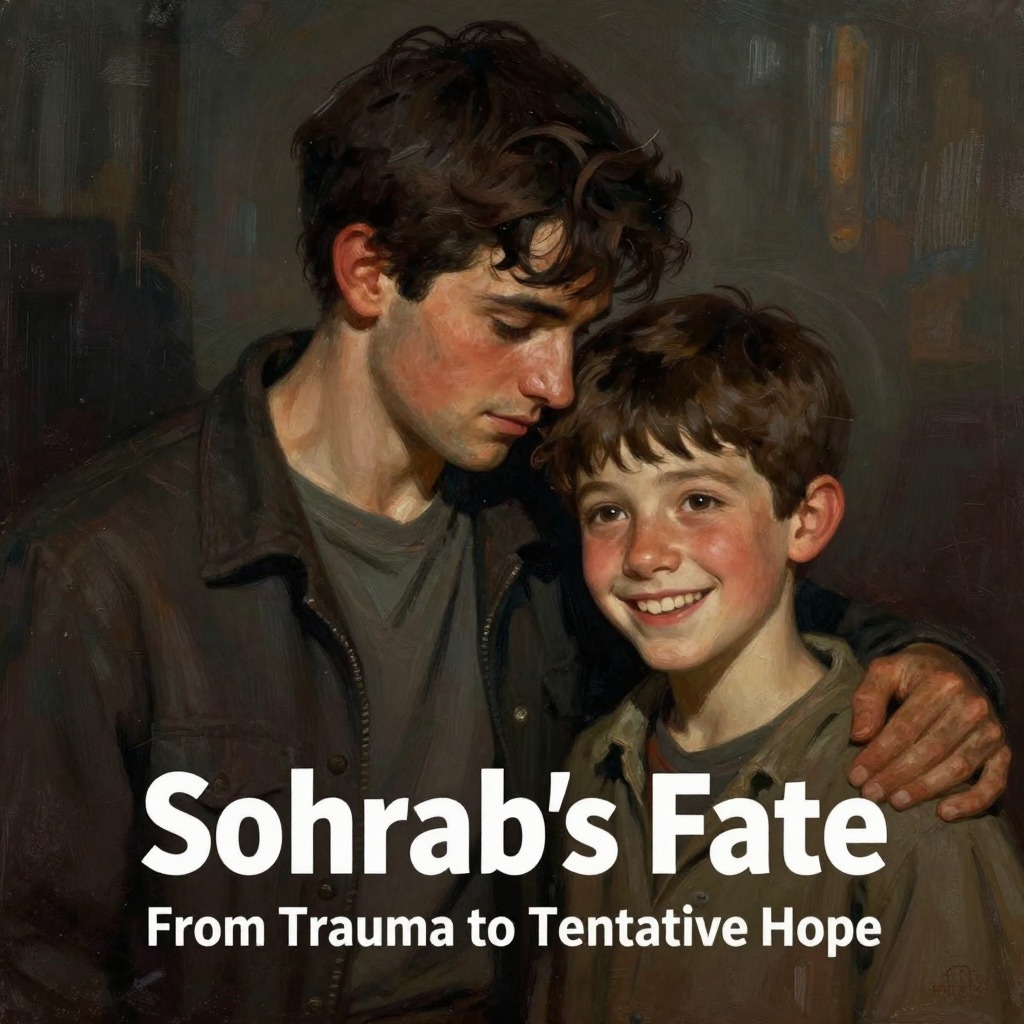
The American embassy in Islamabad becomes the site where that promise shatters. Raymond Andrews, the consular officer, tells Amir bluntly that adopting Sohrab is nearly impossible: the boy is not legally an orphan without death certificates, Afghanistan has no functioning embassy, and the INS strongly discourages such adoptions. The lawyer Omar Faisal confirms the obstacles, suggesting that Amir's best option is to place Sohrab in an orphanage in Pakistan while filing paperwork. Amir, having promised Sohrab he would never send him back to such a place, reluctantly raises the idea. Sohrab's reaction is immediate and desperate: he pleads, trembles, and weeps, saying he is scared of that place, that they will hurt him, that they always lie. Amir holds him and rocks him until he falls asleep, but the damage is done. That night, while Amir is on the phone with Soraya learning that a humanitarian visa has been arranged through her uncle Sharif, Sohrab slips into the bathroom. Amir finds him in the bathtub, the water bloody, a razor on the toilet tank, his eyes half open and lightless. The city's promise of safety is shattered in an instant.
The Hospital Vigil
Sohrab is rushed to a hospital in Islamabad, where Amir spends days in a state of desperate prayer and vigil. The hospital becomes a labyrinth of teeming hallways and blazing white fluorescence, and Amir learns its rhythms: the flurry before the morning shift change, the midday hustle, the stillness of late-night hours interrupted by doctors rushing to revive someone. He keeps watch at Sohrab's bedside in the daytime and wanders the corridors at night, listening to his own footsteps on the tiles. Dr. Nawaz, a surgeon with a British accent, tells Amir that Sohrab had cut himself deeply and lost a great deal of blood, that they had to transfuse several units of red cells and revive him twice. Amir prays on a makeshift prayer rug in the corridor, promising to do zakat, namaz, and fast during Ramadan if God will spare the boy. When Dr. Nawaz finally tells him Sohrab is alive, Amir weeps into the stranger's hands. The city's hospital, with its smells of sweat, ammonia, and curry, becomes the real house of God for Amir—a place where those who have lost God find Him.
The Long Silence
After Sohrab is discharged, he and Amir stay in Islamabad for about a week before flying to America. Sohrab never accepts Amir's offer to come with him, nor does he decline it. His silence is not the quiet of peace but the silence of one who has taken cover in a dark place, curled up all the edges and tucked them under. What Amir takes as a yes is in reality a quiet surrender, an act of relinquishment by one too weary to decide and far too tired to believe. The city that had briefly shimmered with hope becomes the place where Amir learns that some promises cannot be kept, and that redemption is not a single act but a long, uncertain process. Islamabad, with its clean streets and modern buildings, remains in the novel as a reminder that even the most orderly places can hold the deepest chaos, and that the journey toward being good again does not end with a rescue—it begins with the slow, painful work of earning back a child's trust.